
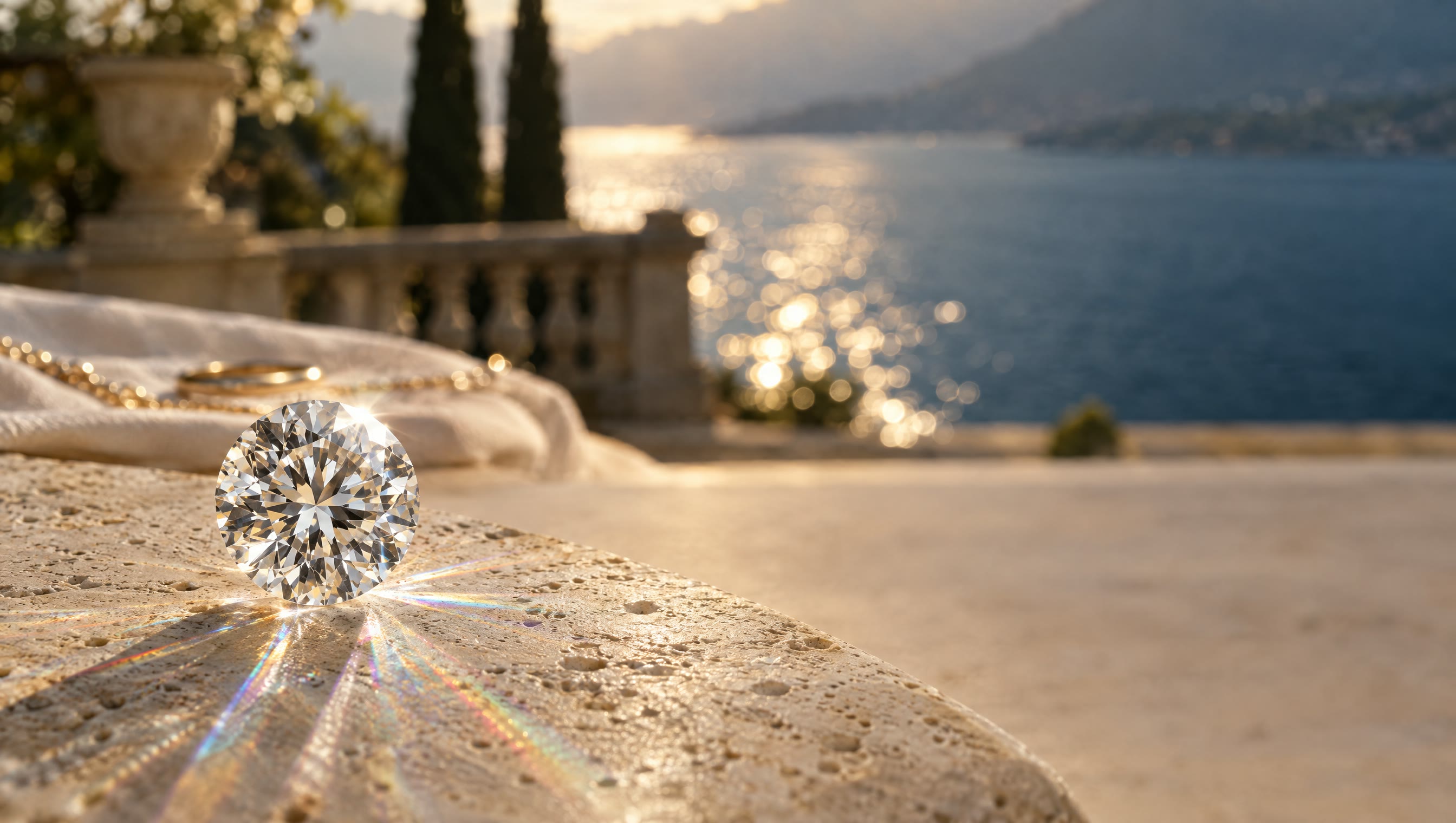
The stone
If it has to feel natural, this is your stone.
Grown in the earth, long before we existed.
A natural diamond is, in substance, the same as a lab-grown one: the same material, the same hardness, the same light. The difference is where it came from — formed deep in the earth, under a pressure no one made, long before we existed.
So choosing one is not choosing a better material. It is choosing an older one — and that is a reason that needs no justification.
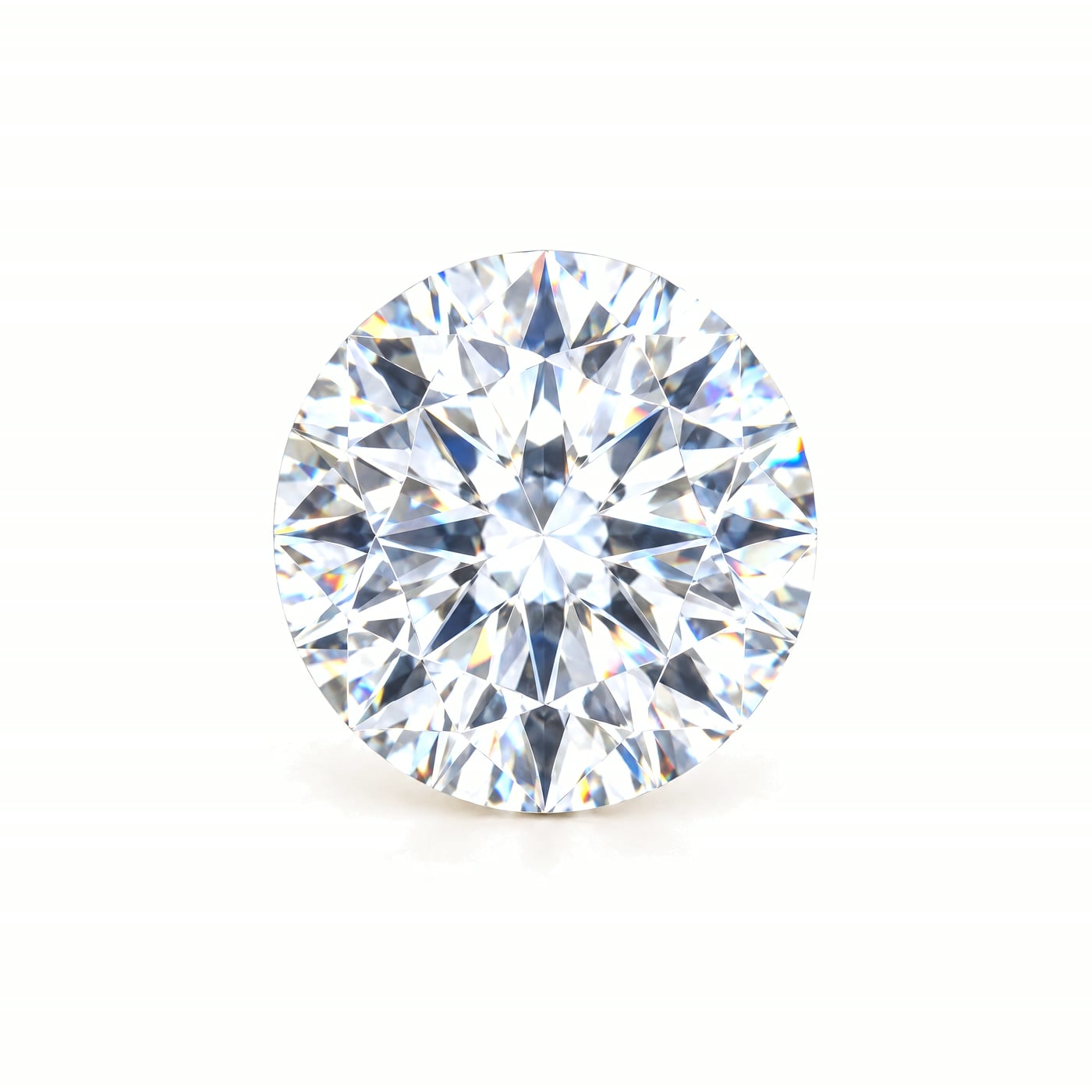
What is in every piece
VAN TOL stands for one quality only:The Best
Colour
D
The highest grade on the scale. There is nothing above it; D means no tint of yellow is visible in the stone, not even side by side with another.
Clarity
VVS2
Inclusions that cannot be found with the naked eye — a trained eye needs tenfold magnification. VVS1, IF and FL sit above it — differences no one finds without a loupe. Our grade applies to every stone we sell, from the earth as well as from a laboratory.
Precious metal
585 / 750
Solid gold, in white, yellow or rose. Nothing plated, nothing filled, nothing below 585 — which of the two finenesses it is, you choose on the piece itself.
The three tones, each in 750 (18 ct)
- White gold
- Yellow gold
- Rose gold
Counted out
What we mean by «The Best».
Clarity: fourth of eleven
The GIA clarity scale has eleven grades. From the top: FL, IF, VVS1, VVS2, VS1, VS2, SI1, SI2, I1, I2, I3. VVS2 is the fourth. Exactly three grades sit above it — VVS1, IF and FL — and we would rather tell you that ourselves than have you look it up.
What those three grades cost, you never get to see. The difference between VVS2 and flawless takes a trained eye at tenfold magnification to find; worn, on a hand, in daylight, it does not exist. Buying FL buys a certificate, not a visible difference.
Where the trade sits, GIA states on its own pages: most diamonds you see in jewellery stores fall between VS and SI — one to four grades below ours. That is the comparison that matters, and it can be checked.
Colour: first of twenty-three
The colour scale runs from D to Z, twenty-three grades. D is the first. There is nothing above it — a stone graded D shows no tint of yellow, not even held against another for comparison.
Here «the best» is meant literally: there is no higher colour grade. It is also the more expensive half of the claim — the step from E to D costs more at purchase than some whole clarity grades.
Gold: solid, 585 or 750
585 and 750 are parts per thousand of fine gold — 58.5 % and 75 %, solid all the way through the piece. Not plated: that would be a layer a few thousandths of a millimetre thick on a base metal, and it wears off. Not gold filled either: a thicker layer, but still a layer rolled on.
Above 750 sit 950 platinum and 999 fine gold. Neither is a higher grade, only a different decision: fine gold is too soft for settings, a stone would not sit safely in it; platinum is a different metal with a different weight and a different price. Which of the two finenesses it is, you choose on the piece itself.
So «The Best» means this: the best quality you can see — the highest grade there is on colour, the grade at which the eye stops finding a difference on clarity, and solid gold rather than a layer of it on the metal.
Whatever a scale knows beyond that is written out above, grade by grade. We do not hide it, because a promise you can check is worth more than one you have to hope for.
The clarity and colour grades, and the statement about the trade, come from GIA — the institute that drew up these scales. You can read them at 4cs.gia.edu. 4cs.gia.edu
The choice you make with us is where the stone came from — not how good it is.