
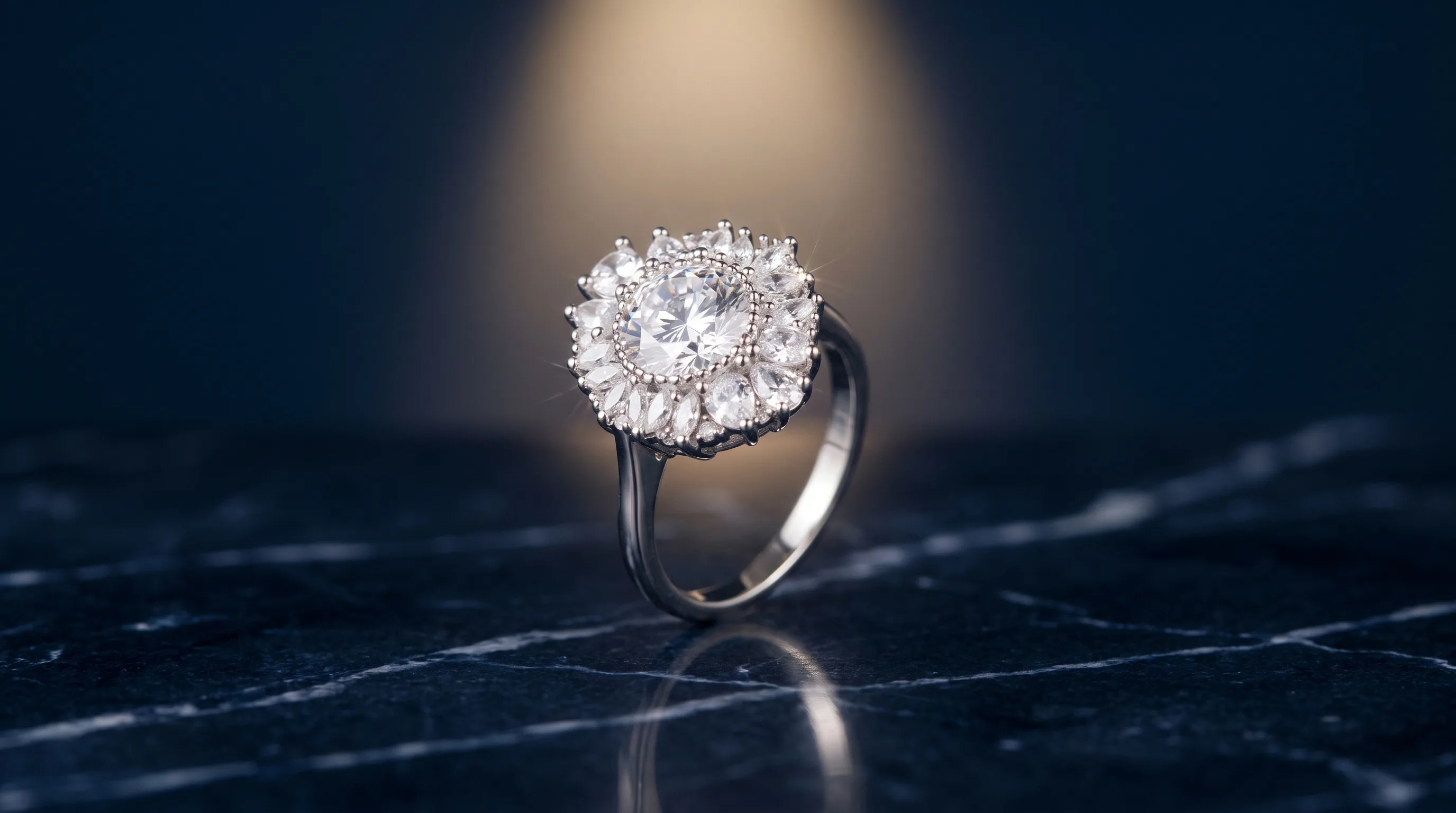
Timeless shine. Modern you.
About VAN TOL
Jewelry that looks like it costs more than it does — without pretending to be something it isn’t.
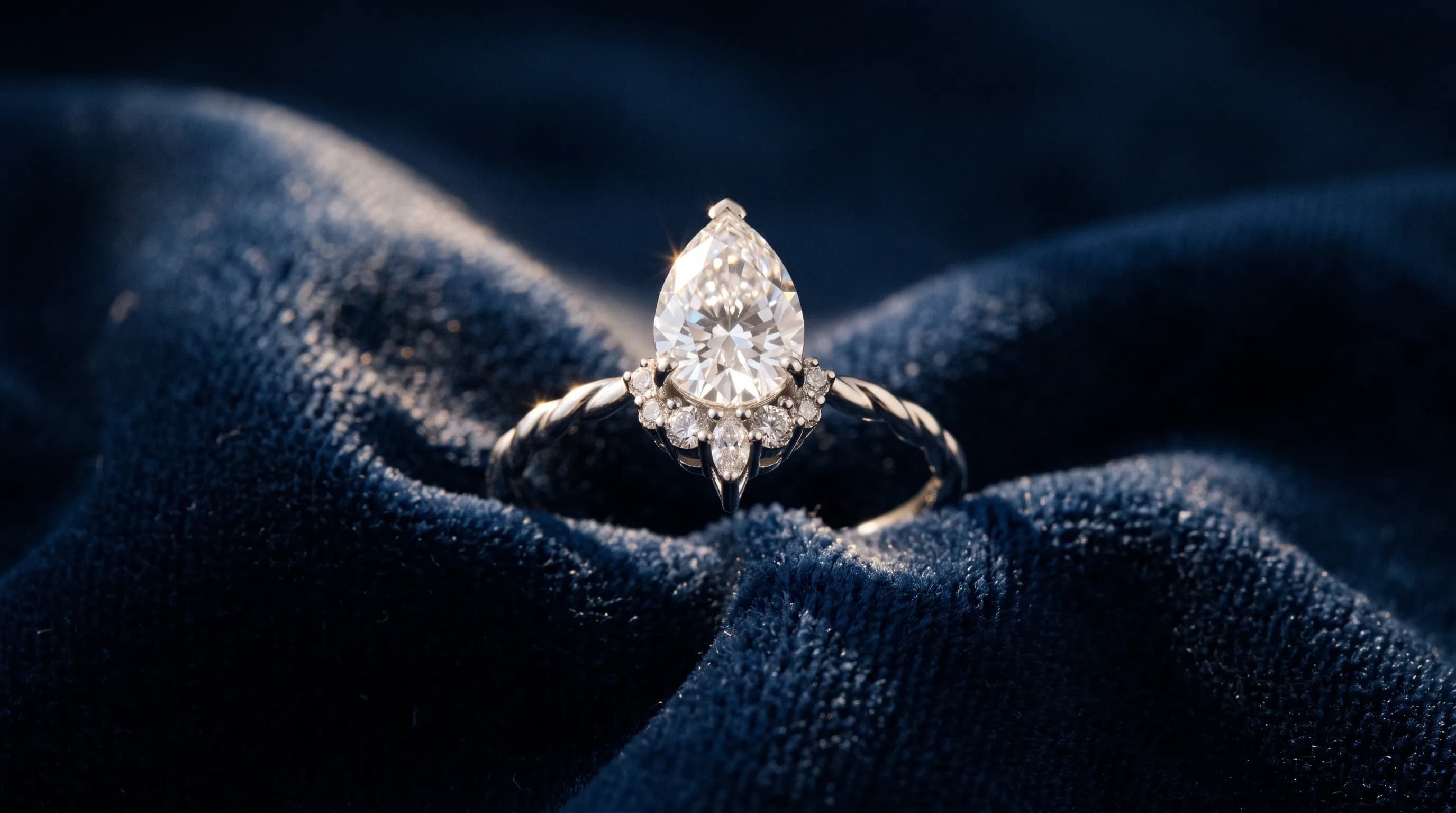
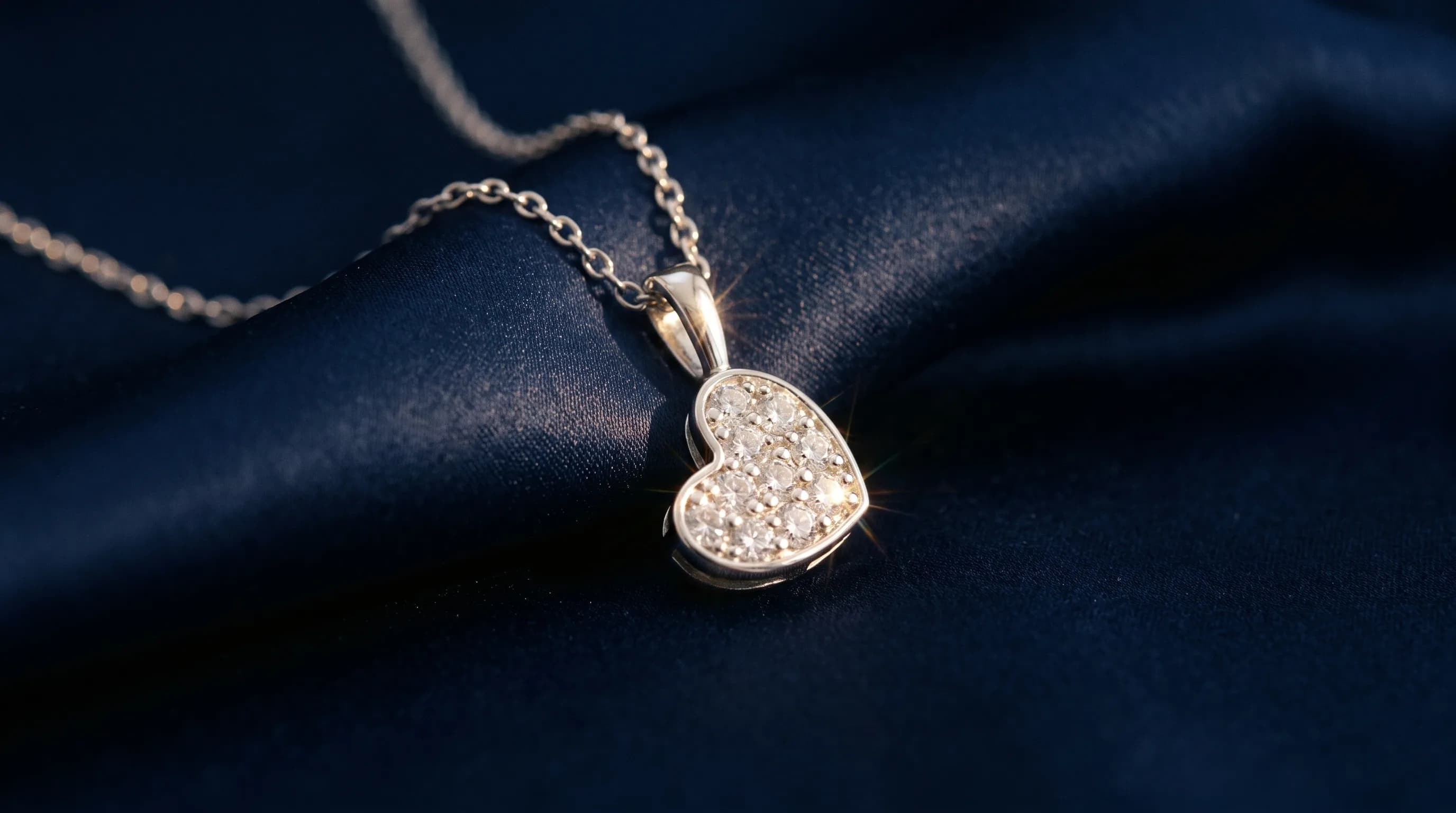
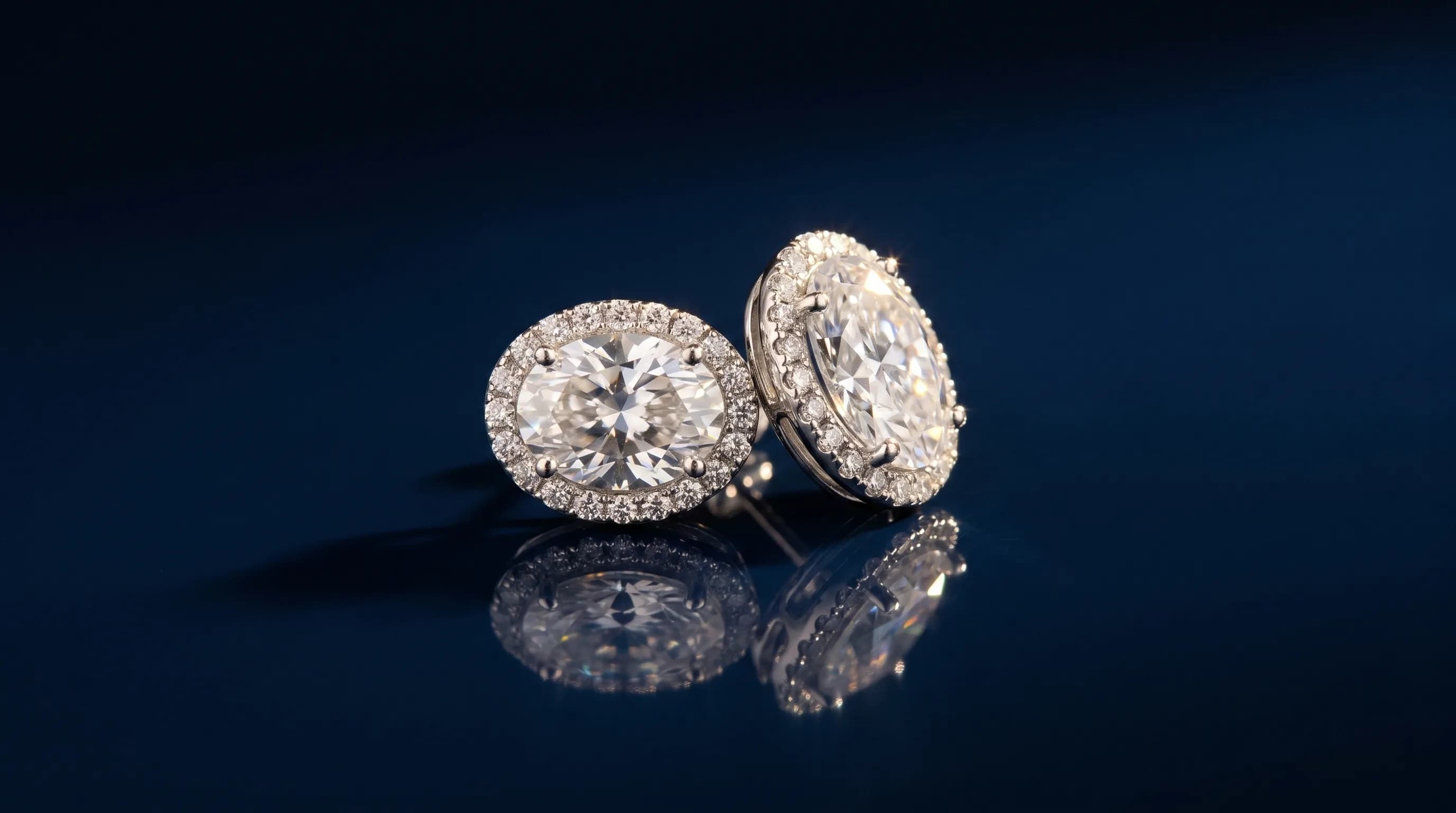
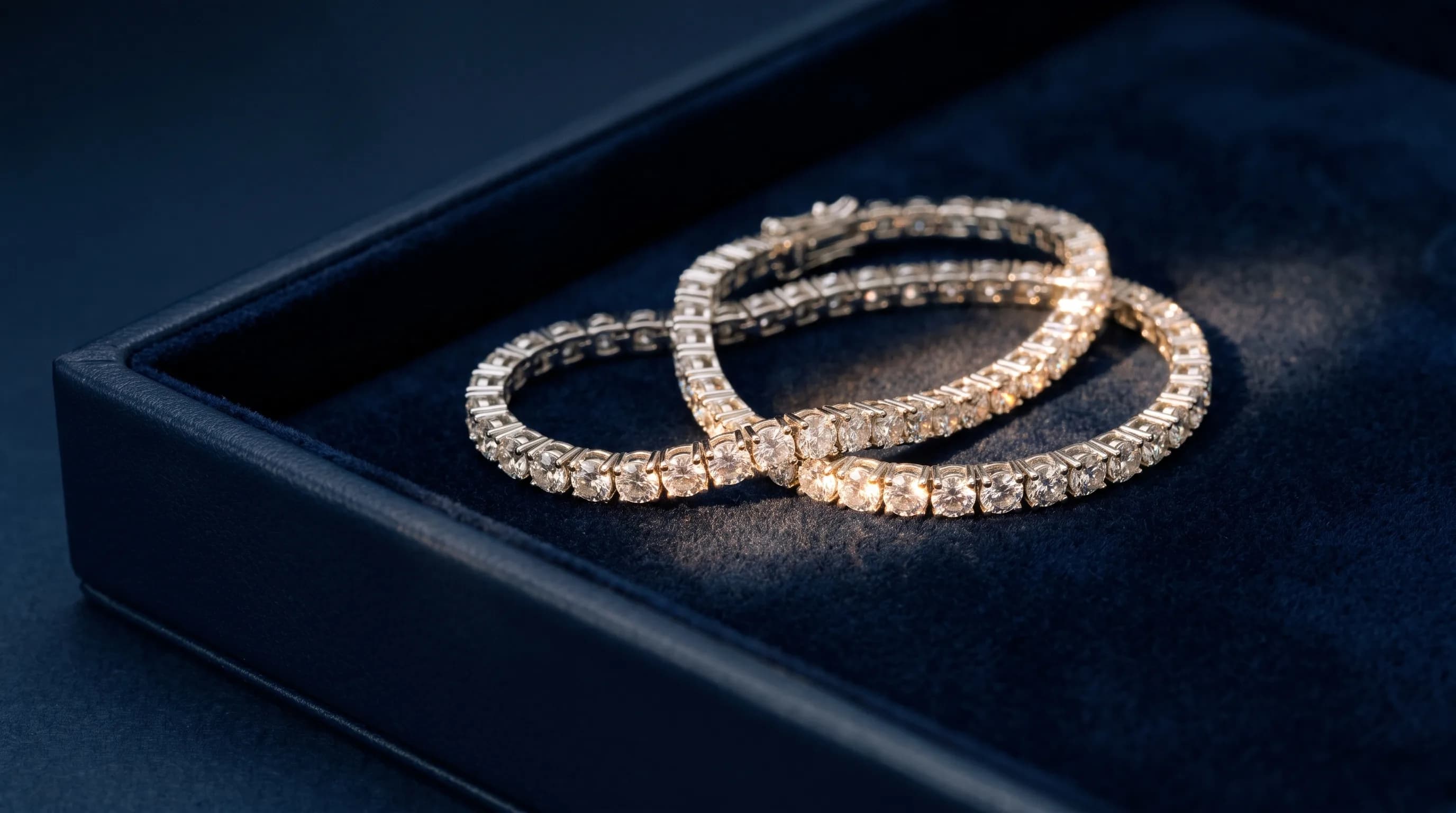
VAN TOL is a small, independent label working in 925 sterling silver and moissanite. The collection is deliberately short: a handful of pieces, each chosen because it holds up in the two places that matter — in the hand, and in a photograph.
Orders are dispatched by our production partner and tracked from the moment they leave. Each piece arrives in the branded case it was made for.
And we name our materials in full. What each one is, what it does, and where its limits are — below.
What it is made of
Three materials,
named in full
The stone
Moissanite
Silicon carbide · SiC
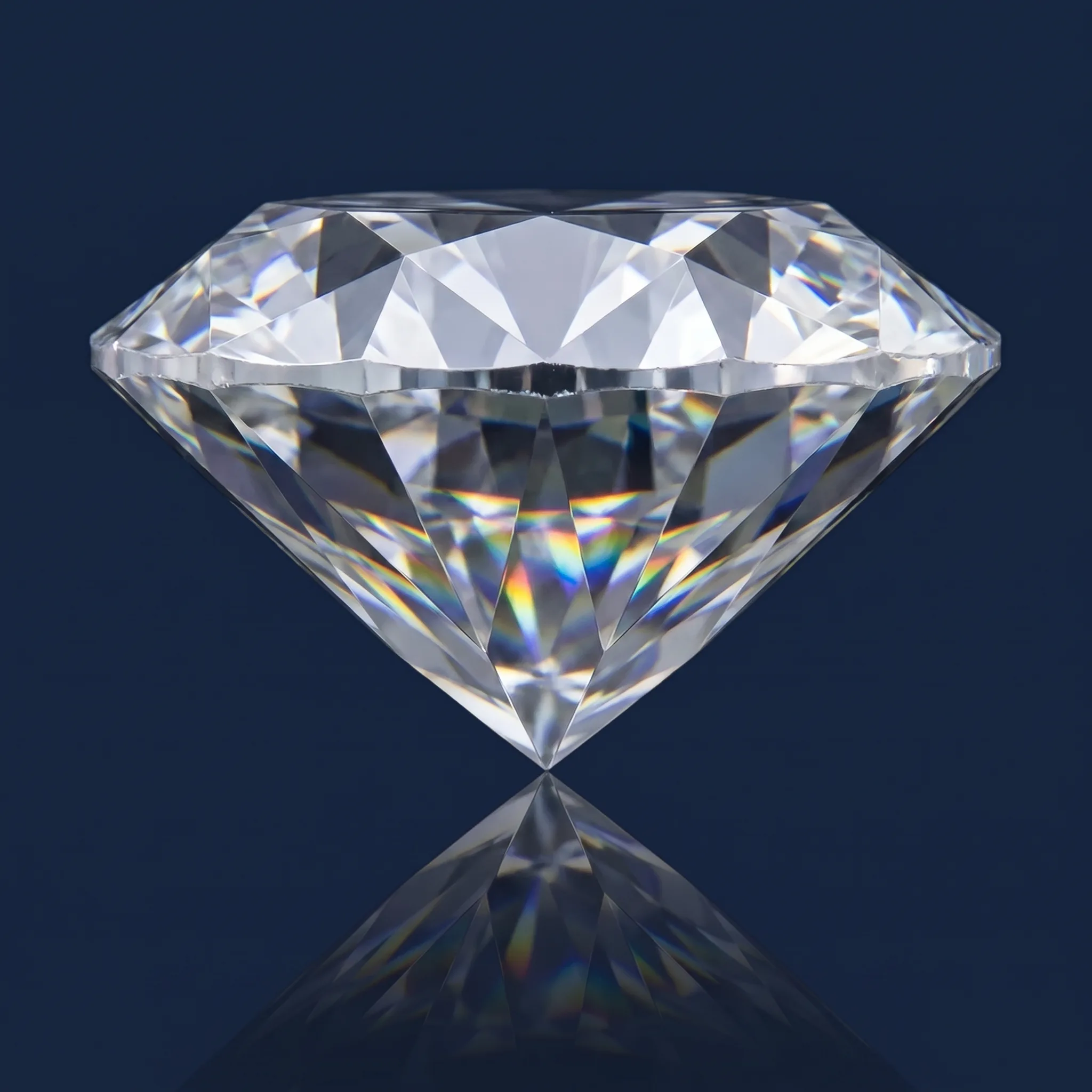
Discovered in a meteorite crater and mistaken for diamond by the chemist who found it. Today it is grown, not mined — and it throws more colour than a diamond ever has.
In 1893 the French chemist Henri Moissan found crystals in rock from a meteorite crater in Arizona and took them for diamonds. They were not: they were silicon carbide, a mineral nobody had recorded in nature before, and it now carries his name. Natural moissanite is far too rare to sell, so every stone in jewelry is grown in a laboratory — which is also why its clarity is consistent in a way mined stone never is.
What sets it apart is dispersion, the splitting of white light into its spectrum: 0.104 against a diamond’s 0.044, roughly two and a half times as much. That is the flash of rainbow colour you see when the piece moves. At 9.25 on the Mohs scale it sits below diamond and above sapphire, hard enough for a piece worn daily. We call it moissanite on every listing — never a diamond substitute or simulant, because it is neither.
- Hardness
- 9.25 Mohs
- Refractive index
- 2.65 – 2.69
- Dispersion
- 0.104
- Origin
- Laboratory grown
The finish
Rhodium
Element 45 · Rh
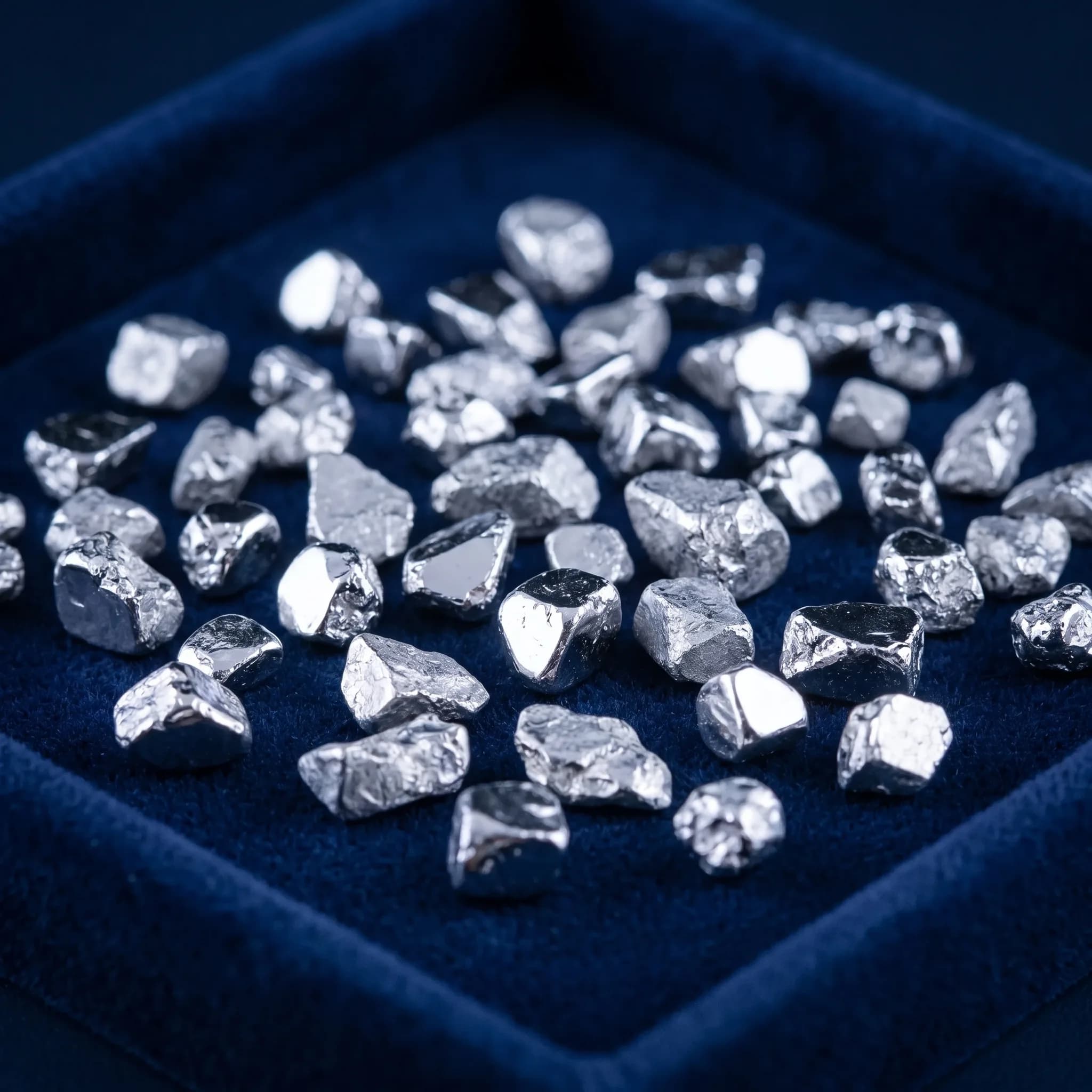
One of the rarest metals on earth, applied in a layer thinner than a human hair — and the reason a silver piece stays bright instead of going grey.
Rhodium belongs to the platinum group and is among the least abundant elements in the earth’s crust — almost all of it arrives as a by-product of platinum and nickel refining, which is why its price has at times run several times above gold’s. On jewelry it is never the body of a piece: it is electroplated over the surface in a layer well under a thousandth of a millimetre. That layer reflects around eighty per cent of visible light and does not oxidise. It is the difference between a piece that stays bright and one that has gone faintly grey in a drawer.
It is also hard, which protects the softer metal underneath. But a thin layer wears: on a ring worn every day, expect the finish to thin where it meets skin and surfaces first, over years rather than months. Re-plating is routine and inexpensive. And because the plating sits between the metal and the skin, it reduces contact with what is underneath — which matters for anyone who reacts to nickel.
- Group
- Platinum group
- Reflectivity
- ≈ 80% of visible light
- Applied as
- Electroplate, sub-micron
- Tarnishes
- No
The body
Sterling silver
92.5% silver · stamped 925
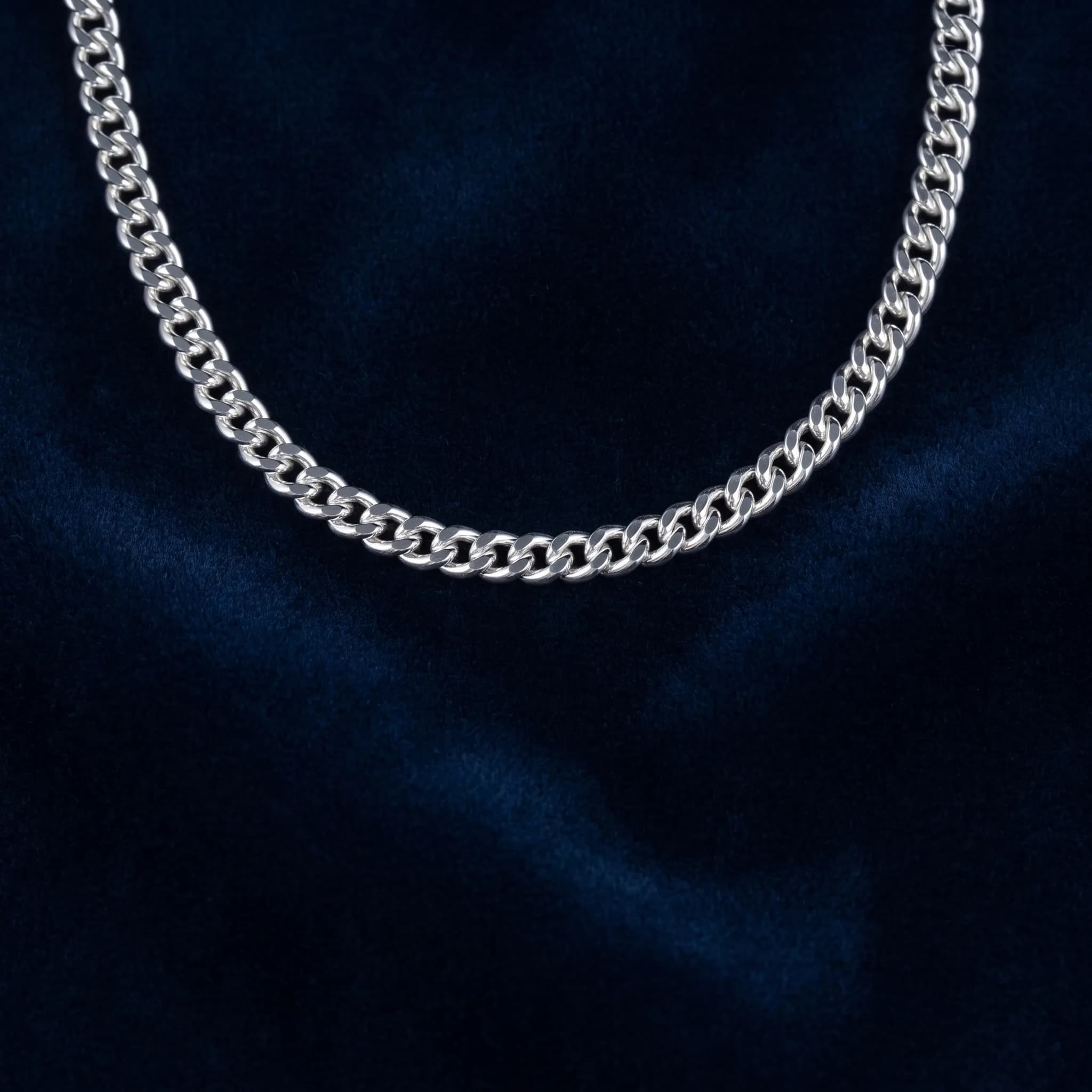
Pure silver is too soft to hold a setting. The 7.5% that is not silver is what makes a piece survive being worn.
Sterling silver is 92.5 per cent silver by weight, the rest usually copper. That ratio is not a dilution to save money: fine silver at 99.9 per cent is soft enough to bend under a thumb, and a prong made from it would not hold a stone. The copper gives a clasp its spring and a setting its rigidity. The 925 stamp is a statement about content, and in Germany a protected one — which is why we name the metal on every listing, and why anything plated is described as plated rather than as silver.
Silver does tarnish, and it is worth knowing what that is: silver reacting with sulphur compounds in the air to form a thin surface layer. It is not rust and not damage. It sits on top of the metal, comes off with a polishing cloth, and takes nothing of the piece with it. Our pieces are rhodium plated over the sterling, which puts a barrier between the alloy and the air.
- Silver content
- 92.5%
- Balance
- Copper
- Hallmark
- 925
- Tarnish
- Surface only, reversible
Questions about a piece?
Get in touch